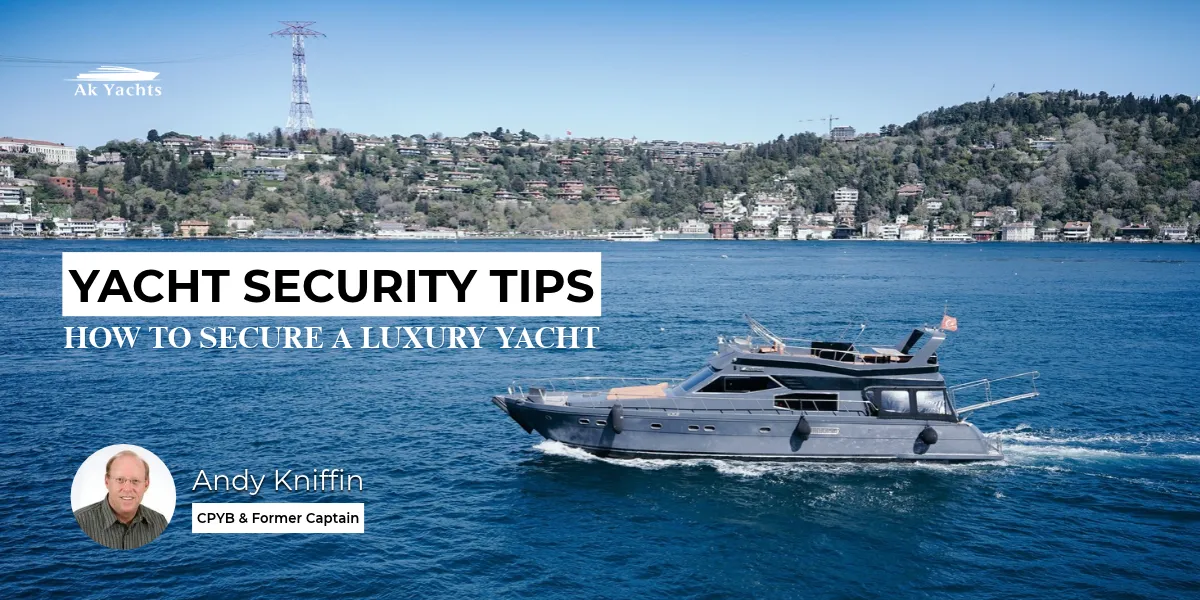
Stories of modern pirates and yacht break-ins can unsettle anyone thinking about owning a yacht. The reality is reassuring. Serious violent incidents against yachts are rare, particularly in the waters most South Florida owners cruise. Even so, when you are aboard, your yacht is very much your own small island, and sometimes in the middle of nowhere. A sensible approach to security is part of responsible ownership.
In my experience, most security problems are far more ordinary than piracy. Tenders, outboard engines and portable equipment go missing, unattended yachts are entered, and keys left in the wrong place make theft easy. Most of these problems can be prevented with good habits, sound equipment and a little local knowledge.
This guide explains how to secure a luxury yacht at every level, from the common-sense measures every owner should take to the integrated security systems now fitted to many superyachts. It covers alarms and monitoring, tender security, crew and watchkeeping, privacy, cruising in remote areas, emergency communication and cybersecurity. If you are planning trips from Florida, our guide to yachting destinations from South Florida is a good companion.
Understand the Real Risks
Good security starts with an honest view of the threat. In the Caribbean, the volunteer network that tracks crime against yachts recorded 124 incidents in 2025, down from a record 145 the year before. Theft made up the large majority, and dinghies and outboard engines were the items most often stolen, usually when they were left unsecured or poorly secured. Violent incidents were few, at seven for the year. The regional report for 2025 shows that crime is concentrated in particular anchorages rather than spread evenly, which is why local knowledge matters so much.
Piracy against shipping is a separate matter. Worldwide, 137 incidents of piracy and armed robbery against ships were reported in 2025, with more than half in the Singapore Straits and many of the rest in the Gulf of Guinea, according to the International Maritime Bureau. These are not typical cruising grounds for most yachts, but owners planning long-range voyages should take the data seriously.
For most owners, then, security is mainly about preventing theft, protecting the yacht while it is unattended and planning sensibly for cruising in remote areas.
Start With the Basics
Make Your Yacht a Hard Target
The aim is not to make theft impossible but to make your yacht less appealing than the next one. Lock doors and hatches whenever the yacht is unattended, and when you sleep aboard at anchor. Keep keys in a lockbox or a well-hidden place, never in the ignition or an obvious drawer. Do not leave valuables, cash or portable electronics in view.
Make navigation electronics harder to remove by limiting access to the back of the units, and consider placing a motion sensor nearby connected to a siren. A thief who sets off an alarm while removing a plotter will usually abandon it in a hurry.
Fit Hidden Engine Cut-Off Switches
One of the simplest and most effective measures is a hidden ignition or fuel cut-off switch that a thief would not know to look for. One of my customers had a large cruiser stolen because the thief simply stepped aboard, found the keys, started the engines and left. The owner installed hidden cut-off switches on his next boat straight away.
Be Careful Who Comes Aboard
Treat the yacht as your private space. Do not invite people you do not know aboard until someone you trust, such as a dockmaster or a fellow cruiser, can vouch for them. When you hire local help to watch the yacht or assist with chores, choose carefully. In small island communities, a reliable local can be one of your best safeguards, because everyone knows everyone.
Alarm, Monitoring and Integrated Security Systems
Alarm and Monitoring Systems for Yachts
A dedicated yacht security system can include concealed sensors on doors, hatches and windows, interior motion detectors, a loud siren, automatic floodlights and alerts sent to your phone or your captain. Cameras, both inside and out, let you check on the yacht remotely and provide evidence if something happens. Remote alerts are especially valuable during quiet periods, such as a long berthing or a shipyard stay, when few or no crew are aboard.
Display a visible warning label to deter intruders, and make sure your dockmaster, captain or a trusted neighbor knows how to reach you or silence the alarm. An alarm that sounds all night in a marina with no one able to stop it will not make you any friends.
Integrated Security Systems for Superyachts
On larger yachts, security systems are increasingly integrated into a single platform that combines several layers:
- Perimeter detection. Radar, thermal and day cameras, and in some cases underwater sonar, monitor the water around the yacht. Advanced systems use software to classify approaching vessels or swimmers and alert the crew only when something warrants attention.
- Boarding detection. Sensors can detect someone climbing the hull or entering through the swim platform.
- Drone detection. As drones have become common, some superyachts now carry systems to detect unauthorized drones, which are a privacy concern as much as a security one.
- Access control. Electronic access by zone keeps contractors and visitors out of guest, owner and technical areas, while visitor logs record who is aboard and why.
- Hardening and refuge. Lockdown systems can secure exterior doors quickly, and some new builds include a safe room or citadel with independent communications.
- Deterrents. Acoustic hailing devices and powerful searchlights can warn off an approaching boat without escalation.
These systems are specialized, and the right combination depends on the yacht’s size, use and cruising plans. A reputable superyacht security solutions provider can assess the vessel, design an integrated system and train the crew to use it. A recent overview of superyacht security technology gives a sense of what is now available.
Securing Tenders and Water Toys
Tenders are the most likely target for theft on almost any cruise, in the Caribbean and in the United States alike. They are the lifeblood of cruising and difficult to replace in remote places. Often the thief does not want the tender at all, only the outboard engine, which is valuable for local transport and fishing.
Practical steps that work:
- Store it aboard when not in use. Lift the tender onto the deck or out of the water on its davit. Davit cables are hard to cut, though not impossible.
- Lock it properly. When the tender is in the water, use a heavy, cut-resistant cable or chain secured to a strong stainless fitting. Light bicycle cables can be cut in seconds with bolt cutters.
- Dock stern-to where possible, so the tender is not easy to pull away.
- Fit a hidden kill switch and take the keys. Many stolen tenders are simply towed away, so the cable and storage matter as much as the switch.
- Add a tracker. A small, hidden satellite or GPS tracker can locate a stolen tender anywhere, and some insurers require one on more expensive tenders.
- Mark it for identification. Stamp an identifying mark on the engine and somewhere hidden on the hull where it cannot easily be sanded off, and keep a record of serial numbers and the hull identification number.
- Leave the name off. A tender with the yacht’s name on it, tied to a dock ashore, tells everyone the yacht may be unattended.
- Look modest. A gleaming new tender and engine attract attention. In less secure areas, some owners prefer an older but reliable tender, or fit a worn cowling over a newer engine. Many owners who tow a center console in the Bahamas leave the newer RIB on deck.
If a tender is stolen, report it to the local police at once and share the details with other cruisers, since word travels fast in island communities. Do not try to recover it yourself, even if your tracker shows where it is. Let the authorities handle it.
Looking for a Yacht Built for Your Plans?
Security needs differ for a weekend cruiser, a long-range explorer and a superyacht with a full crew. Andy Kniffin, CPYB, can help you find a yacht with the layout, systems and equipment that suit the way you cruise. View our mega yachts for sale or speak with Andy.
Crew, Watchkeeping and Privacy
Keep a Proper Watch
At anchor, an anchor watch should double as a security watch. If your radar has a guard zone, set it to a few hundred yards so it alerts you to boats approaching. Keep a powerful spotlight and several handheld lights ready, and make sure everyone on watch knows where the deck and floodlight switches are and how to make a VHF call.
Choose and Prepare Your Crew Carefully
On crewed yachts, people are the most important security layer. Vet crew thoroughly with background checks, references and verified qualifications. Confidentiality agreements and clear rules on social media and personal devices protect the owner’s and guests’ privacy. Share itineraries only with those who need them, and consider quieter berths and private landing points for discreet arrivals. For higher-risk voyages, trained security personnel can travel with the yacht and work alongside the crew without drawing attention. A practical guide to yacht security and management covers these crew measures in more detail.
Cruising in Remote Areas
Most island communities are honest and welcoming, and I have found that true in decades of cruising. But, as anywhere, there are a few bad apples, and a visiting yacht can look like easy pickings to someone without income. Small communities do work in your favor, since stolen goods are hard to hide when everyone knows each other.
Before you go, research your destination. Check government travel advisories, regional security reports such as the annual Caribbean yacht crime report, and the local cruising nets, and talk to other cruisers who know the area. In remote anchorages, travel with or anchor near a like-minded yacht and keep an eye on each other. The best way to avoid trouble in a problem area is not to go there. For long-range voyages, the International Maritime Bureau’s piracy reports show where attacks on shipping are concentrated.
Firearms and Defensive Equipment
Carrying firearms aboard is a serious decision with legal consequences. Most countries require every firearm to be declared on arrival, and many restrict or prohibit them, particularly handguns and military-style weapons, partly because they do not want them stolen and circulating ashore. Failing to declare a firearm is illegal and can lead to arrest, heavy fines and the seizure of the yacht.
If you do carry firearms, check the rules of every country on your itinerary in advance, declare them at each clearance and ask whether they can stay aboard in a locked, concealed cabinet or must be held by the authorities. Many experienced cruisers choose not to carry them at all. Several firms in South Florida offer security training for owners and crew, covering how to recognize and respond to threatening situations and how to de-escalate them.
Keep a good supply of in-date flares and signaling equipment aboard. Their purpose is to attract attention and summon help.
Communication and Emergency Preparedness
Reliable communication is one of the best security tools you have. I recommend placing several handheld VHF radios with Digital Selective Calling (DSC) within easy reach around the yacht. When a DSC radio is registered with a Maritime Mobile Service Identity (MMSI) number and connected to GPS, pressing the distress button sends an alert with your position to every vessel and rescue station in range. Use it only for grave and imminent danger, as it is a formal distress call.
Beyond line-of-sight VHF, satellite communications and a registered emergency beacon allow you to call for help from almost anywhere. Agree on an emergency plan with your crew and guests, including who calls for help, where people gather and how the yacht is secured. Your flag and your citizenship give you some protection abroad, as our guides to yacht registration USA and yacht registration international explain, but prudence remains the best protection.
Cybersecurity
Modern yachts are networked, with navigation, entertainment, cameras, access control and guest Wi-Fi often linked together. That makes cybersecurity part of yacht security. Risks include ransomware, GPS interference, weak passwords, contractors with open-ended remote access and guest devices that can expose private information.
Sensible measures include separating the navigation and control networks from guest Wi-Fi, keeping software up to date, removing unused accounts, limiting and logging contractor access, training the crew to recognize phishing and including a cyber incident in emergency drills. Many private yachts fall outside mandatory cyber rules, so it is up to the owner and management team to make it a priority. An independent cyber review is a worthwhile investment on any larger yacht.
Insurance and Records
Talk to your insurer about its security requirements, as some insist on trackers for expensive tenders or particular alarm systems, and ask whether security features affect your premium. Keep photographs, serial numbers and receipts for valuable equipment, along with the hull identification numbers of the yacht and tenders. These records make recovery and claims far easier if something goes missing.
Conclusion
Securing a luxury yacht is mostly a matter of layers and habits. Lock up, hide the keys and fit hidden cut-off switches. Protect your tender above all, since it is the most likely target. Add alarms and monitoring scales to your yacht, and on larger yachts consider an integrated system designed by a specialist. Keep a proper watch, choose your crew carefully, research where you are going and make sure you can call for help.
None of this needs to spoil your enjoyment. Done well, good security fades into the background and lets you relax and make the most of every cruise.
Talk to an Experienced Captain and Broker
Andy Kniffin, CPYB, spent more than twenty years as a professional captain before turning to brokerage. Whether you are buying your first yacht or moving up, he can help you find one that suits your plans. Learn more about our Fort Lauderdale yacht broker service.
Frequently Asked Questions
What is the most common security threat to yachts?
Theft is by far the most common, particularly of tenders and outboard engines. In the Caribbean, theft accounted for the large majority of reported crimes against yachts in 2025, while violent incidents were rare.
How do I secure a luxury yacht when it is unattended?
Lock all doors and hatches, keep keys out of sight, fit hidden engine cut-off switches and install an alarm with remote alerts and cameras. Store the tender aboard, and make sure a dockmaster or captain can respond if the alarm sounds.
What are integrated security systems for superyachts?
They combine several layers, such as radar, thermal cameras, sonar, boarding sensors, drone detection, access control and alarms, into one monitored platform. They are usually designed and installed by a specialist security provider.
How can I stop my tender from being stolen?
Store it aboard or lifted on its davit when not in use, lock it with a heavy cut-resistant cable, fit a hidden kill switch, remove the keys, add a hidden tracker and avoid putting the yacht’s name on it.
Is piracy a risk for yachts cruising from Florida?
Piracy is uncommon in the waters most Florida-based yachts cruise, including the Bahamas and much of the Caribbean. Petty theft is a more realistic concern. Owners planning long-range voyages should check current regional security reports.
Can I carry firearms on my yacht when cruising abroad?
Rules vary by country. Most require all firearms to be declared on arrival, and many restrict or prohibit them. Failing to declare a firearm is illegal and can lead to serious penalties, so check every country’s rules before you go.
Do yachts need cybersecurity?
Yes, particularly larger yachts with networked navigation, entertainment and security systems. Separating networks, updating software, controlling remote access and training crew all reduce the risk.
Will security equipment lower my yacht insurance premium?
It may. Some insurers require trackers or alarms on certain yachts and tenders, and some take security measures into account when setting premiums. Ask your insurer directly.
This article provides general information only. Firearms, customs and security regulations vary by country and change over time. Consult the relevant authorities, a qualified security professional or a maritime attorney before making decisions.